Potassium sulphate (K2SO4)

Potassium sulfate (SOP – sulfate of potash), which is planned to be obtained within the framework of the project, is an independent potassium fertilizer. It is used for both the main and pre-sowing application, fertilizing agricultural and ornamental plantings grown in open and protected ground on all types of soils. Recommended for cruciferous crops (collard and cauliflower, broccoli, kohlrabi, watercress, spinach, Brussels sprouts, arugula, radishes, turnips or forage turnips, rutabaga), vegetables (pepper, eggplant, tomato, cucumber, etc.) and simply gray-loving crops: oilseed rape, sunflower, onion, garlic, etc. Potassium sulfate is used primarily for crops sensitive to chlorine (potatoes, tobacco, flax, grapes, citrus fruits, etc.), which reduces the safety of harvested agricultural products.
In the world, the main raw material for the production of potash fertilizers are sylvins (compounds of potassium and chlorine), therefore, the technology for obtaining potassium sulfate often does not allow to completely get rid of chlorine, and additional cleaning operations are expensive and time consuming. The technology developed by OOO Baikal Nedra Geo makes it possible to immediately produce a premium-class product that does not contain chlorine-ion, since this element is absent in the feedstock, and additional purification steps are not required in comparison with standard approaches to SOP production.

Additional benefits of using potassium sulfate:

Has a low salt index, suitable for all types of soils; Does not contain nitrogen, which is an advantage in the final stages of plant development; Improves the quality and taste of vegetables and fruits; Improves the appearance and color, firmness and processability of fruits and vegetables.

Comparison of samples obtained during pilot works with the requirements of national standards:

Potassium carbonate (K2CO3)

Potassium carbonate (potash) is a potassium fertilizer for sod-podzolic acidic soils. It is used on acidic soils as the main potash fertilizer, especially for crops sensitive to chlorine. In other cases, calcined and one and a half-water potassium carbonate is used in:

Additional benefits of using Potassium carbonate:

Construction (as an anti-freeze additive); Glass (in the production of refractory glass and crystal), electrovacuum, chemical and other industries; Сompound feed for broiler chickens.

Comparison of samples obtained during pilot works with the requirements of national standards:

Alumina (Al2O3)

Alumina obtained from synnyrites together with potash fertilizers is the main raw material for the production of aluminum. In industrial practice, alumina is produced from clayey rocks – bauxite, as well as nepheline, alunite, koalin.
Alumina is used in 2 main areas: the production of metallic aluminum (GOST 30558-2017) and in the production of refractories, ceramics, which is regulated by the content of the alpha phase and physicochemical properties (GOST 30559-98), namely:

With a high content of alpha-aluminium oxide – for the production of electrical insulating, electro- and radio-ceramic products, special types of ceramics, electro-porcelain, refractories, grinding and abrasive materials; 

With a low content of alpha- aluminium oxide – for the production of high-alumina cements, as catalysts, etc. 

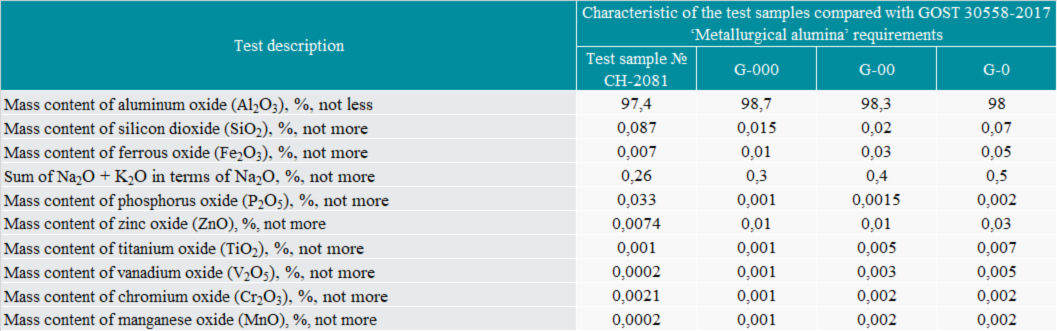
Comparison of samples obtained during pilot works with the requirements of national standards:

ENG_Alumina
ENG_Alumina_two

Aluminum hydroxide Al(OН)3

Aluminum hydroxide is used like: The main reagent in the production of compounds, cryolite, aluminum sulfate, flame retardant; Abrasive component in toothpastes; Filler in the production of paints, paper and plastic products; Foundation for catalysts.

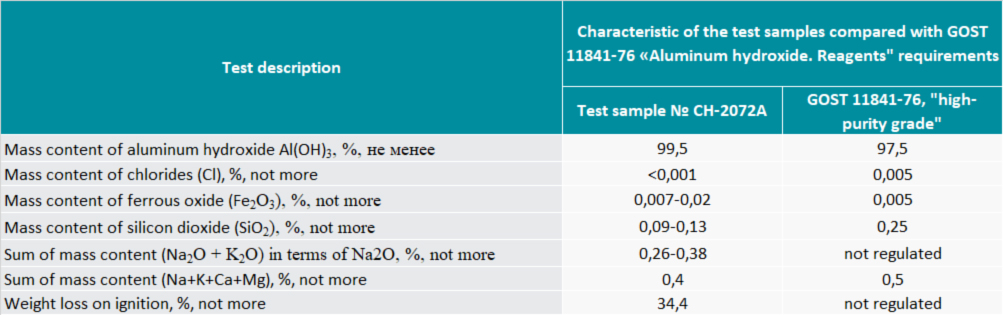
Quality of aluminum hydroxide sample produced from synnyrite:

Aluminum hydroxide eng
Contacts
Russia, Saint-Petersburg
Office address
8, Street Tverskaya, building 2 lit.B, 191015
Russia, Nizhneangarsk
Office address
51, Street Taezhnaya, 671710