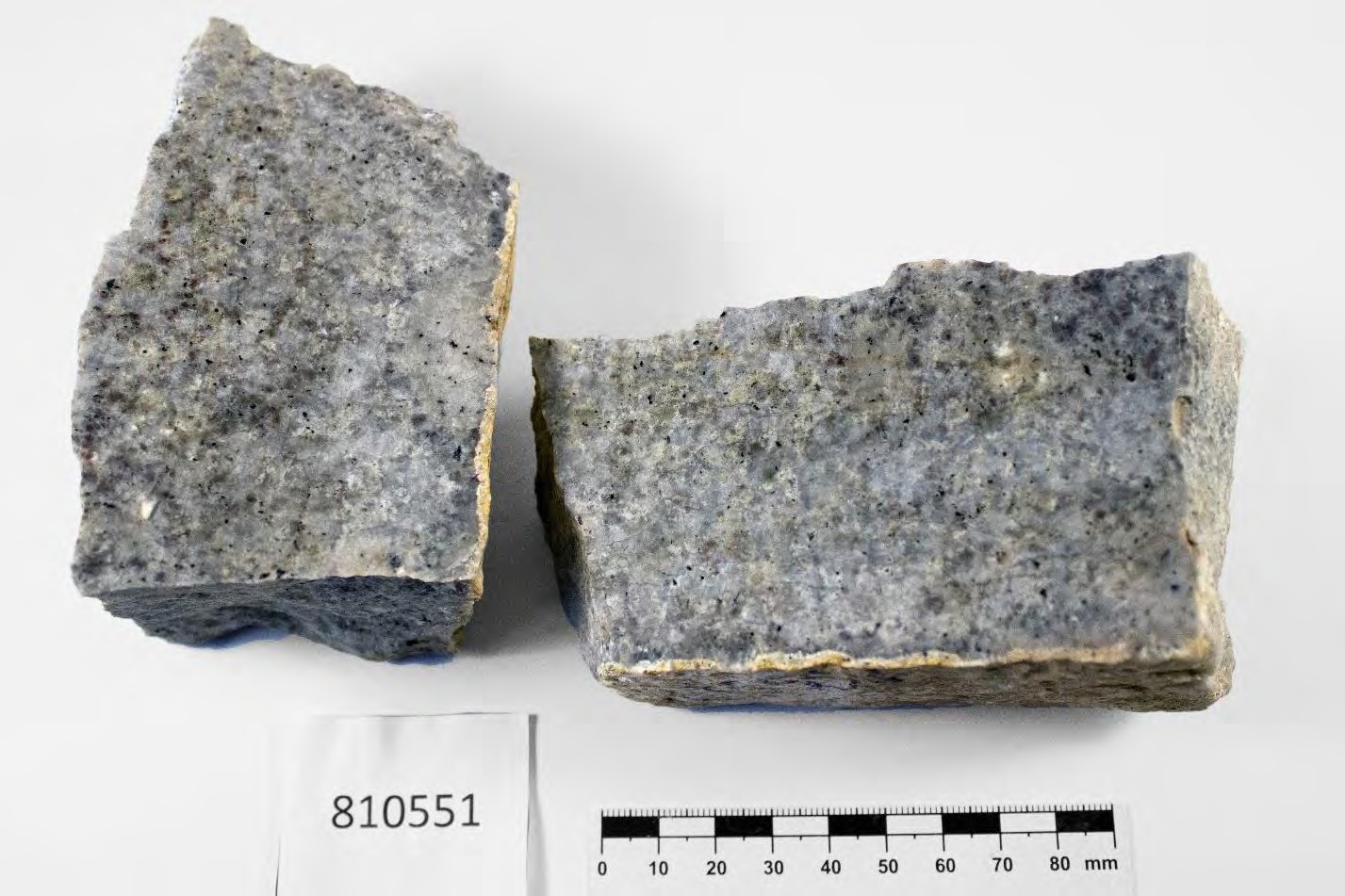
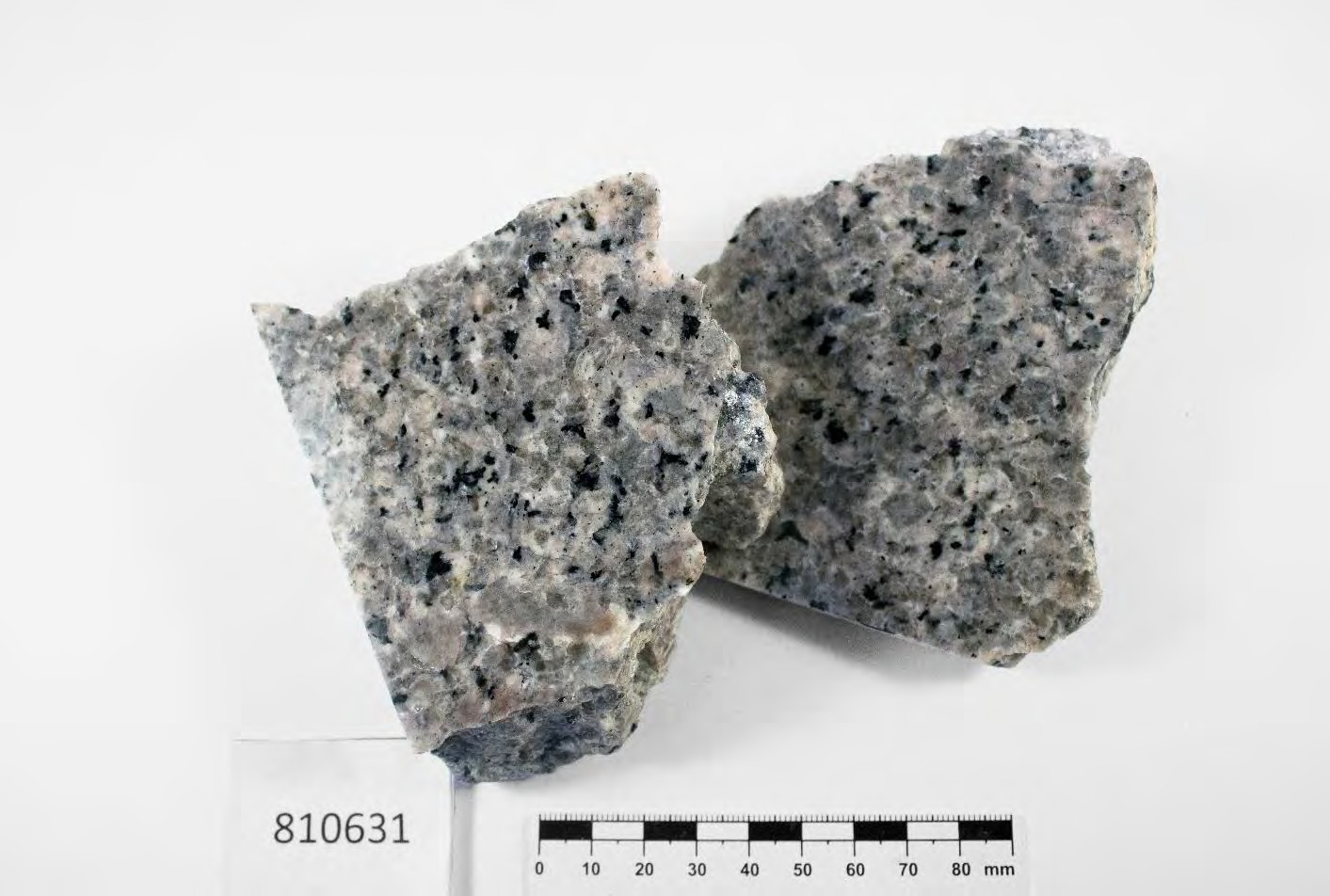
The central ultrapotassium part of the massif is followed by an intermediate zone composed mainly of apofeldspathoid light-mica-microcline metasomatites, nepheline syenites, and minor amounts of synnyrites and melanocratic rocks. In the marginal parts of the massif there are only large fields of nepheline and nepheline-bearing syenites, with relatively small areas of secondary microcline-muscovite rocks and rare thin bodies of synnyrites, mesocratic syenites and shonkinites. Associated with the stratified series dykes of the first intrusive phase are represented in more than 90% of cases by leucocratic microcline syenites, and most often located in the inner parts of the intrusion in contact zones of feldspathoidal and melanocratic alkaline syenite.
Sodalite and sodalite-cancrinite syenites are always confined to the intersection of fault structures. Some questions of the origin of these formations remain unclear, although most of the data testify in favor of their metasomatic genesis – in the bulk of the studied samples sodalite and kankrinite replacement of primary nepheline is established. Outcrops of albitites and scapolitites are also confined to the tectonic diagonal zones of northeastern and northwestern strike, which indicates the occurrence of sodium-calcium metasomatosis along this zone.
Most of the faults within the massif are accompanied by crushing zones with halos of metasomatically altered rocks. Secondary iron hydroxides, biotite, and very rarely amphibole appear in shonkinites and associated melanocratic syenites. In addition, there are crushing zones (from the first centimeters to the first meters of thickness) in which the fragmentary synnyrite substrate is cemented by melanocratic biotite-pyroxene-titanite material. It should be noted that the Synnyr massif is located in intersection of two large tectonic structures (northeastern and northwestern strike-slip), which were laid down in the early Proterozoic, with some manifestations of activity along them traceable to the present time. Therefore, disintegration processes within the rocks of the ultrapotassium complex began immediately from the moment of its formation, constantly renewed as the intrusion matured.
The next major stage was considered to be an intrusion of pulaskites (rocks with characteristic linear textures composed of feldspars, pyroxene, amphibole, biotite and a small amount of nepheline) in the central part of Synnyr massif. Previous authors often point out that the linear textures of the rocks of the central stock are always parallel or subparallel to the contour line of this magmatic body. However, more than 80% of the area here has no bedrock outcrop, and where it is encountered, there is often a sharp change in textural and structural characteristics, including the orientation of linearity. In addition, massive varieties are also relatively widely developed. A number of works in the past and recent studies indicate that the formation of the rocks of the so-called second magmatic phase occurred by the introduction of at least two large intrusive bodies, with pulaskites occupying up to 80% of the central magmatic edifice in the central, southern and eastern parts, while the western and northwestern segments are made by quartz-bearing syenites and alkaline granites.
In the areas of the southwestern and northern contacts of the Synnyr massif there are rather large bodies of alkaline granites, which have secant relationships with both the host Precambrian strata and feldspathoid syenites. The question about the belonging of granitoid bodies to the alkaline high-potassium complex remains open, but we can confidently speak about the common geological and tectonic position of these intrusive formations and close age parameters.
dike swarms
The association of small dike bodies of different composition into a single complex is rather tentative, especially since the character of spatial distribution indicates the existence of independent alkaline-gabbroic, lamprophyre and granitoid small intrusive series. Thus, lamprophyre dikes are found only in the northeastern part of the massif and have maximum development in the headwaters of the Taborny Creek and the Tala River basin. It was discovered that lamprophyres penetrate rocks of both the first and second intrusive phases, as well as the host carbonate formations of the Lower Cambrian Kootenay Formation, extending beyond the Synnyr massif. Several petrographic and mineralogical varieties of these rocks are distinguished – comptonites, monchikites, kersantites, minettites, lamproites (?). Dikes of alkaline gabbroids are noted in the northeastern part of the massif only within the rocks of the first intrusive phase. Granosyenite dikes are found in the near-contact northern and southern parts of the massif.
High silicate rocks inside the massif have not been practically studied so far. We have identified zones of quartzization of vein coarse-grained syenites within the license area, as well as essentially quartz linear bodies within syenites and granitoids of late intrusive phases in
the central part of the massif.